A Few Touchdowns in the Eventful History of KEF
The history of aviation in Iceland spans over a century and has developed rapidly from limited domestic flights into a strong connection with the wider world. Keflavík Airport plays a key role as a link between Europe and North America.
The history of the terminal at Keflavík begins during the Second World War, when the United States built a military airfield at Miðnesheiði between 1942 and 1943. After the war, the Icelandic state took over operations in part, but a defense agreement with the United States in 1951 led to the continued presence of the military and its strong involvement in the development of the area. For a long time, military operations dominated the site, but over the years the airport became increasingly important for civilian passenger flights and cargo transport.
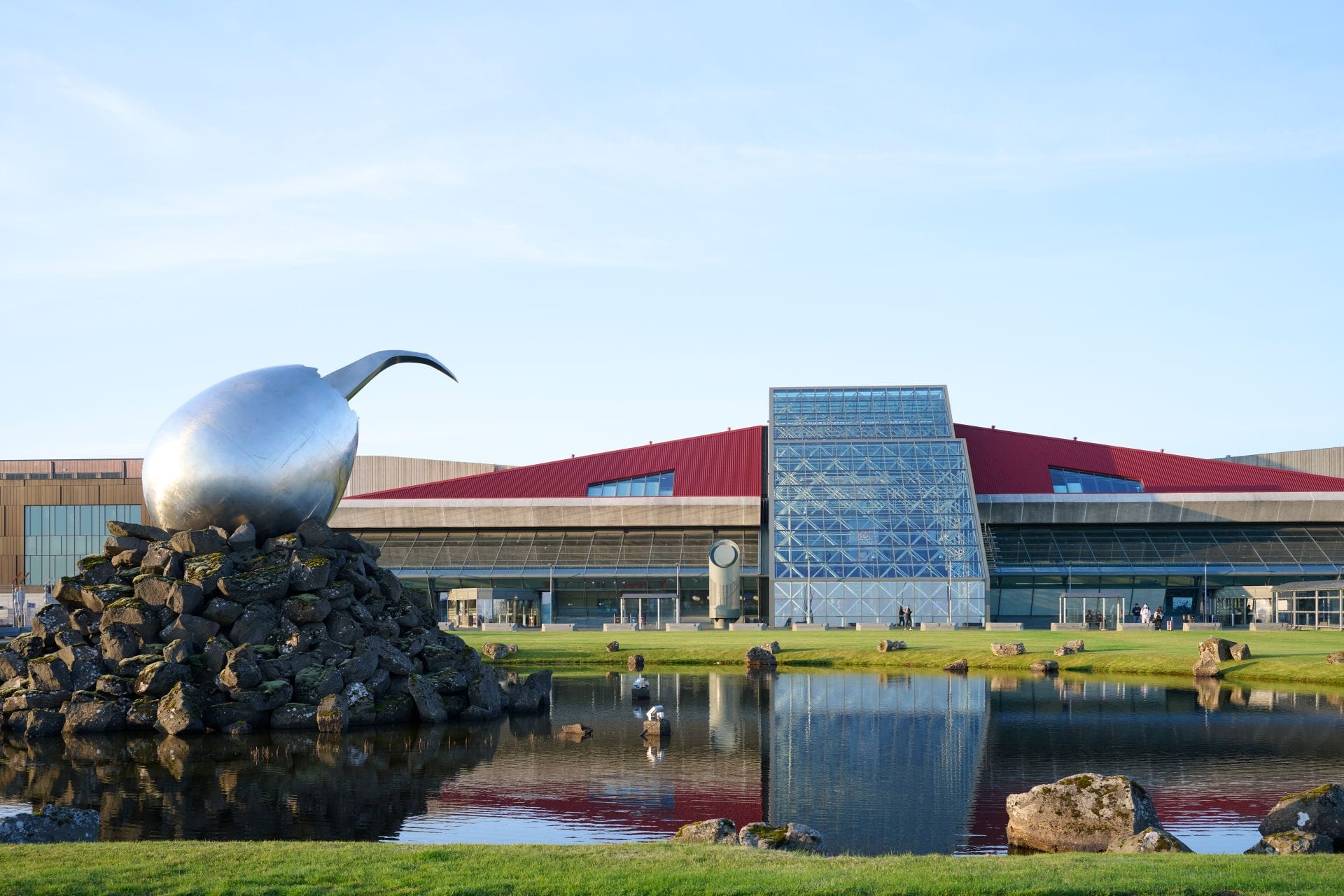
The opening of Leifur Eiríksson Air Terminal in 1987 marked a turning point. It was the first terminal in the country designed specifically for international flights, although it was still located within the defense area. This was a major milestone, as civil passenger aviation was finally separated from military operations in a dedicated building, although the military presence on the airport site itself continued until 2006, when the Icelandic state took full control of the area.
Passenger numbers have grown rapidly since the beginning of international flights from Keflavík Airport. In 1962, approximately 38,000 passengers passed through the original terminal each year. By 1986, the year before Leifur Eiríksson Terminal opened, that number had grown to around 600,000 passengers annually. At that point, the terminal had aged and struggled to handle the increased volume. Today, around 8 million passengers pass through Keflavík Airport each year, with connecting flights playing a significant role. Projections for 2045 estimate that nearly 16 million passengers will pass through the airport annually, equivalent to around 44,000 passengers per day.
What is built to last must be built with care
The origins of the current terminal’s development can be traced back to the 1960s, with the establishment of an airport planning committee. The aim was to construct a terminal building that met the demands of the modern age and would be a source of pride for the nation.
It was clear to Icelanders that the terminal would serve as the country’s face to the outside world in the eyes of the many passengers passing through. In that lay an opportunity — to inspire visitors to extend their stay, and to encourage more international airlines to take advantage of the high-quality facilities for passenger travel available here.
A team of architects and designers contributed to the design of the terminal. Garðar Halldórsson, State Architect of Iceland, was the architect of the first phase of the terminal. He worked in collaboration with the American architects Shriver and Holland, who specialized in airport design, particularly in the areas of passenger flow and terminal planning.
From the outset, the building was conceived to allow for phased expansion over the coming decades, enabling it to accommodate steadily increasing traffic and evolving passenger demands.
The building is late modernist in character and reflects the qualities of public architecture from the latter half of the 20th century: concrete construction, clear forms, and a sense of weight and dignity. The terminal’s strongest attributes lie in its flexibility, its use of light, its connection to weather and landscape, and, above all, its capacity to grow.
An Icelandic character in material selection, where appropriate, defines the building and all subsequent expansions of the terminal. Examples include Icelandic basalt, rhyolite, and Icelandic volcanic pumice.
In 2001 and 2016, key expansions of the terminal were brought into use. The earlier expansion, the South Building, was driven by two factors: on the one hand, increasing passenger numbers, and on the other, the need to meet Schengen requirements for separating passenger flows within and outside the Schengen area. The South Building has a different architectural expression from the original Leifur Eiríksson Terminal: more steel, more glass, and a flatter, more technical character.
The building was designed by the Danish architectural firm Arkitekter MAA PAR in collaboration with Arkitektar ehf. in Iceland. The geographical position of Iceland, between Europe and America, is central to the design, which is divided into two parts. Between them lies a kind of “rift,” intended to evoke Iceland’s geological uniqueness, as the country is split in two along the Mid-Atlantic Ridge. Passengers traveling either into or out of the Schengen area must pass through this rift. The extension was designed with future adaptation and expansion in mind.
The 2016 expansion was designed by Studio Andersen & Sigurdsson Arkitekter and Teikn Architects and was nominated for the EU Mies Award the following year. The design emphasizes a clear and logical layout, glass façades, and a steel structure, along with materials and colours that reference the Icelandic landscape. The extension incorporates views and weather as part of the design. The glass façades open onto the apron, the surrounding landscape, and the ever-changing weather, allowing passengers to experience not only an international terminal space, but Iceland as a destination.
On a Rapid Journey into the Future
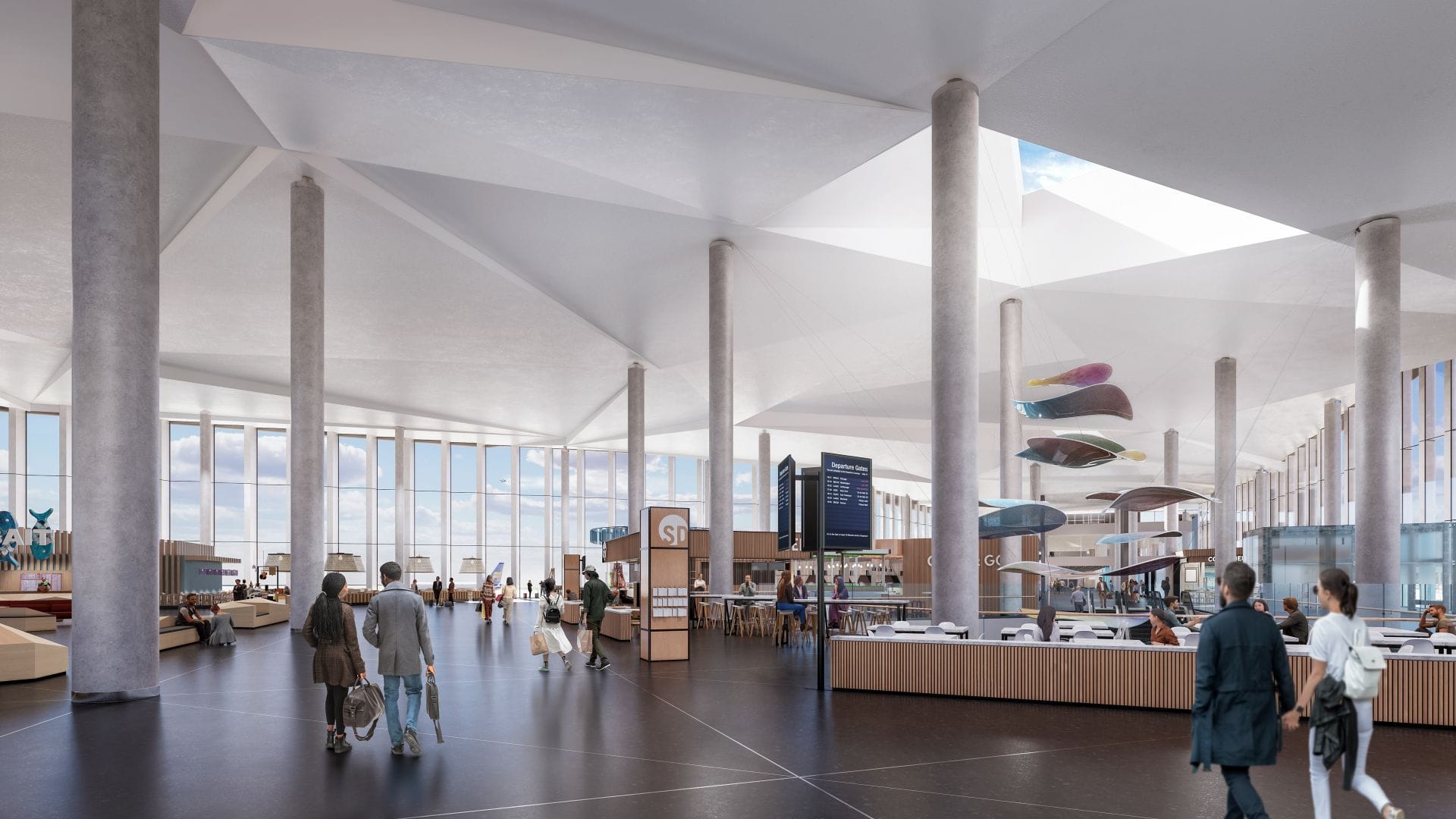
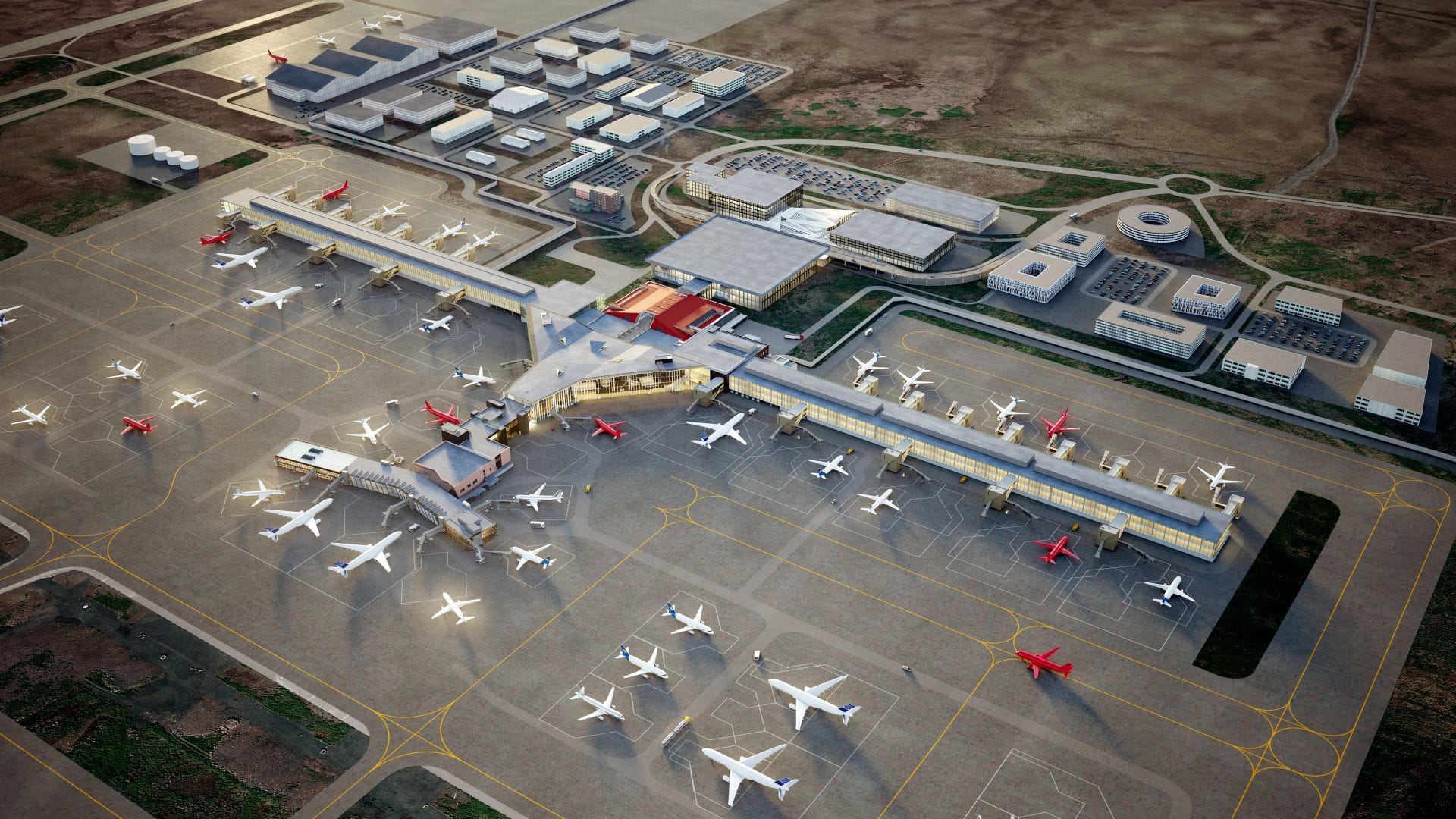
In recent years, the terminal at Keflavík has undergone significant changes. A new east wing has been constructed, expanding the terminal by 30% and improving facilities for both arriving and departing passengers, with new waiting areas and additional departure gates. Today, the terminal is the largest public building in Iceland.
In 2015, Nordic Office of Architecture won a competition for the large-scale development of Keflavík Airport. The project focuses on creating a flexible and robust framework for the airport’s development up to 2045, with an emphasis on making use of existing infrastructure, runways, and buildings, and expanding the airport without interrupting operations. Major construction projects lie ahead, including a new connector building between the northern and southern parts of the terminal, which will become the heart of Keflavík Airport. The connector will unify passenger flows, link older and newer sections, and improve facilities for transfer passengers with new spaces for services, waiting areas, and arrivals. Work is also underway on the design of an eastern pier, which will further expand passenger space with larger waiting areas, new departure gates, and increased space for retail and dining.
Access to the terminal is also being redesigned, with a new roundabout connection that improves traffic flow and safety. Improved facilities will be provided for buses and taxis, and pedestrian walkways will be covered. The arrivals area will also be redesigned, with a larger entrance hall, a new customs corridor, and enhanced services to make passenger arrivals smoother and more comfortable.
19421942
The start
The United States builds a military airfield at Miðnesheiði.
19621962
The move to KEF
Iceland’s international flights are moved entirely to Keflavík Airport.
19871987
New terminal
Leifur Eiríksson Terminal is inaugurated, replacing the older terminal.
20012001
South building expansion
The first major expansion of the terminal, when the South Building is brought into use.
20162016
KEF is growing
The South Building is further expanded and work begins on a large-scale development project at Keflavík Airport.