Music Talk
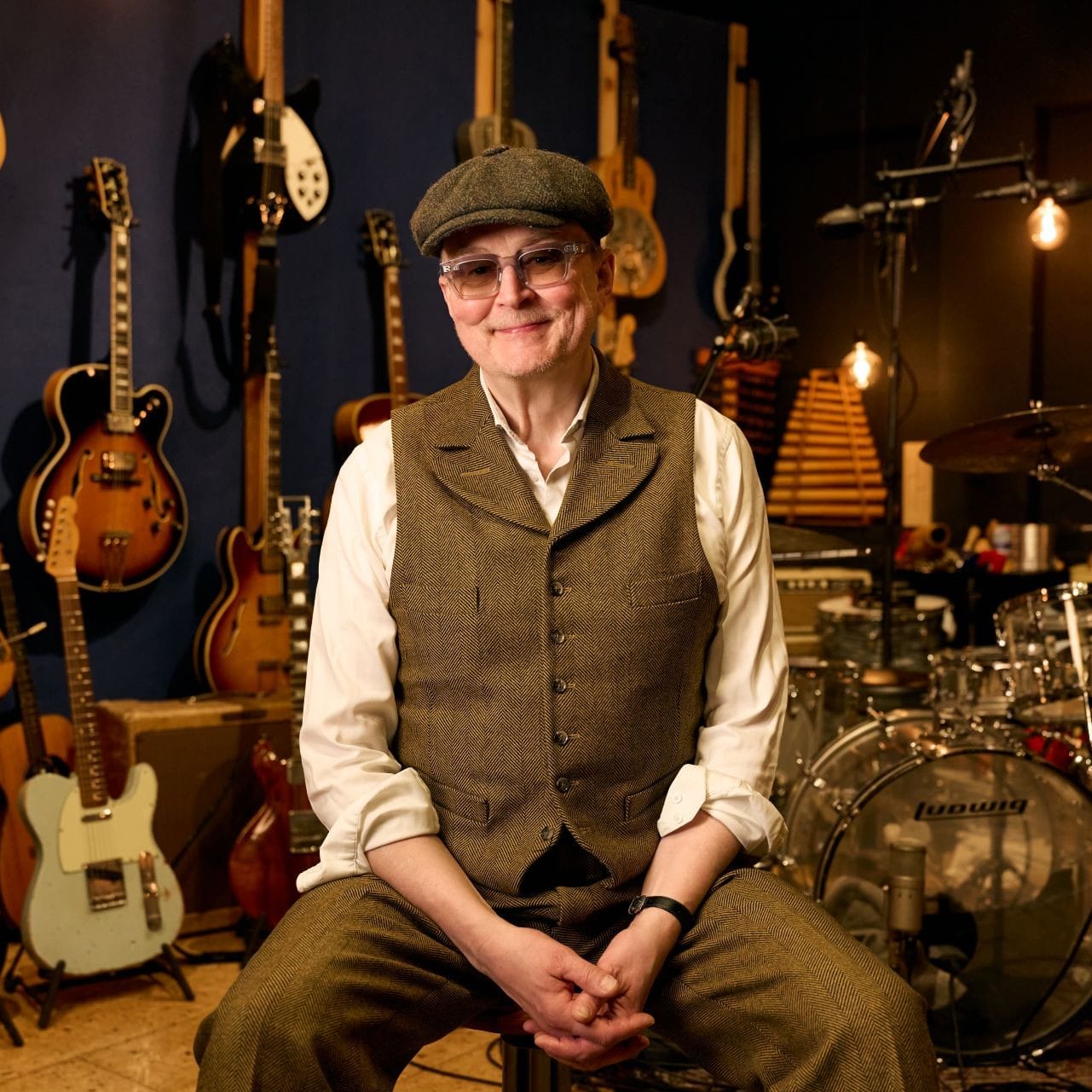
Sigtryggur Baldursson is a musician and educator, and a former member of the Icelandic band The Sugarcubes alongside Björk. He currently works for Iceland Music, the information and support centre for Icelandic music.
The program
This summer, Sigtryggur is hosting the music talk as part of the BLESS program at KEF, taking guests on a journey through Icelandic music. Here is a summary of the talk, along with a list of artists mentioned and songs played. The songs are also available here to listen.
This small island of just 400,000 inhabitants produces an extraordinary amount of music, so much so that people often speak of the Icelandic music phenomenon. Icelanders are passionate music lovers, as the numbers show:
- 48% of the population plays an instrument or sings
- 59% attend at least one concert each year
- 94% listen to music regularly
- Icelanders listen to music for an average of 78 minutes a day
Björk
Human Behaviour
Björk helped bring international attention to Icelandic music and became one of the country’s most influential cultural ambassadors.
Yet Iceland’s musical heritage stretches back centuries, with traditions such as rímur among the oldest forms of Icelandic music.
Steindór Andersen
Göngu Hrólfsrímur
This performance tells the story of Göngu-Hrólfur, a character from the Icelandic sagas dating back to the 14th century.
For centuries, vocal traditions played an important role in Icelandic music. Musical instruments were largely absent from religious life, helping shape strong traditions of chanting, singing and choir music that continue to this day.
Hamrahlíðarkórinn
Heyr, himnasmiður
Hamrahlíðarkórinn is one of Iceland’s best-known choirs and has played an important role in shaping generations of Icelandic musicians, including Björk.
Heyr, himnasmiður, composed by Þorkell Sigurbjörnsson, gained international attention after a performance by the Icelandic band Árstíðir went viral online in 2013. Today, it is one of Iceland’s best-known choral works abroad.
Haukur Morthens
Ó, borg mín borg
Haukur Morthens was one of the defining voices of his era and remains an important figure in Icelandic popular music.
In the decades following the Second World War, new musical influences reached Iceland through the US military presence in Keflavík. Jazz, swing and later rock and roll gained popularity, and many of Iceland’s most successful bands of the 1960s emerged from the area surrounding the airport.
Hljómar
Bláu augun þín
Like much of Icelandic popular music at the time, Hljómar drew inspiration from international trends, particularly the British pop sound of the 1960s.
While Icelandic music flourished in the following decades, international success remained rare. That changed in the early 1980s, when an Icelandic jazz-fusion band unexpectedly broke through abroad with an instrumental hit.
Mezzoforte
Garden Party
Released in 1983, Garden Party became an international hit, reaching No. 17 on the UK Singles Chart and helping introduce Icelandic music to a wider audience.
The door had opened. Five years later, another Icelandic band would make an even bigger impact in the UK with the release of their debut single.
The Sugarcubes
Birthday
With Björk as their lead singer, The Sugarcubes became Iceland’s first internationally successful alternative rock band. The release of Birthday in 1987 attracted widespread attention from the British music press and helped establish the band on the international stage.
Following The Sugarcubes’ success, Björk launched a solo career that would make her one of Iceland’s most influential artists. The next Icelandic act to attract international attention would take a very different approach.
Sigur Rós
Hoppípolla
Sigur Rós became one of Iceland’s most successful international indie acts, helping draw further attention to Icelandic music abroad. Their success helped strengthen Iceland’s reputation as a source of innovative and influential artists.
As international interest in Icelandic music continued to grow, a new generation of musicians began attracting attention abroad, including a young singer who would soon make her mark in the UK and Germany.
Emilíana Torrini
Jungle Drum
Released in 2009, Jungle Drum became a major international success, reaching No. 1 in Germany and introducing Emilíana Torrini to a wider audience.
By the early 21st century, Icelandic music had become increasingly diverse, with artists from a wide range of genres finding success both at home and abroad.
GusGus
Over
GusGus represents the growing presence of electronic music in Iceland, adding yet another genre to an increasingly diverse music scene.
By the early 21st century, Icelandic musicians were finding success across a growing range of genres both at home and abroad.
múm
We Have A Map Of The Piano
Known for their distinctive and experimental sound, múm became one of several Icelandic bands to gain international recognition in the early 2000s.
For artists seeking international audiences, originality can be an important distinguishing factor. As the scene continued to grow, artists increasingly found success across a wide range of genres while maintaining their own unique sound.
Sólstafir
Grýla
Sólstafir is one of Iceland’s best-known metal bands and has built a strong international following through extensive touring and a distinctive sound.
Although metal rarely reaches mainstream audiences, Icelandic metal bands have built dedicated international followings. Its influence can also be heard beyond the genre itself.
Quarashi
Stick‘em up
Quarashi blended influences from hip hop, rock and electronic music, representing yet another direction in Icelandic music.
The next artist may sound very different, but he once shared a studio space with Quarashi and was also a member of a metal band.
Jóhann Jóhannsson
The Theory of Everything
Jóhann Jóhannsson gained international acclaim for his film scores, earning a BAFTA, an Emmy and a Golden Globe before his untimely death in 2018.
One of his closest collaborators, Hildur Guðnadóttir, went on to become the first Icelander and the first woman to win an Academy Award for Best Original Score for Joker in 2020.
Hildur Guðnadóttir
Bathroom Dance
Iceland has produced a growing number of internationally recognised film composers.
Among them is Ólafur Arnalds, who won a BAFTA in 2014 for his score to Broadchurch and is now widely known for his solo work.
Ólafur Arnalds
saman
Ólafur Arnalds is often associated with the post-classical genre, which has grown significantly in popularity in recent years.
Iceland has also produced internationally acclaimed classical musicians, including pianist Víkingur Ólafsson, who has become one of the world’s most sought-after concert performers.
Víkingur Ólafsson & Jean Philippe Rameau
The Arts and the Hours
While Víkingur is one of Iceland’s best-known classical performers, Icelandic composers are also making their mark internationally.
Composers such as Daníel Bjarnason, Bára Gísladóttir and Anna Thorvaldsdóttir have written works for some of the world’s leading orchestras and ensembles.
Anna Thorvaldsdóttir
III. Existence
This is the third and last part of a trilogy called In the Light Of Air by Anna Thorvaldsdottir. Meanwhile, in the world of popular music, there is what some call the local hero syndrome – artists who achieve great success at home without becoming widely known internationally.
In many countries, artists can build successful careers without ever looking beyond their home market. In Iceland, however, the small size of the local music scene has encouraged many musicians to reach international audiences. As a result, Iceland has produced a remarkable number of artists working abroad despite its population of fewer than 400,000 people.
Not every successful Icelandic artist becomes known internationally, however. One notable example is Bubbi Morthens, often regarded as one of Iceland’s most influential singer-songwriters.
Bubbi Morthens
Rómeó og Júlía
Bubbi Morthens has been one of Iceland’s most popular artists for decades, with hit records dating back to 1978. Today, a new generation of local heroes has taken the stage.
Bríet
Esjan
Bríet, who has also collaborated with Bubbi, has been hugely popular in Iceland for several years. She has recently started working in Nashville, which may mark a step towards breaking out of the local hero syndrome.
Nashville is known as Music City, and it is also where the Icelandic band Kaleo moved in 2015, the same year they had a major hit with Way Down We Go.
Kaleo
Way Down We Go
Kaleo are one of the exceptions to the rule: a band with major international success that remains popular at home. They are set to play a large concert in Iceland in June.
The next act represents one of Iceland’s most played musical exports of the past decade.
Of Monsters and Men
Little Talks
After breaking through internationally in 2013, Of Monsters and Men became one of Iceland’s most successful musical exports.
Artists find international audiences in different ways. Daði Freyr, for example, gained worldwide attention during the COVID-19 pandemic through the Eurovision Song Contest.
Daði Freyr
Think About Things
Daði Freyr became an international viral sensation with Think About Things, introducing a new global audience to Icelandic music.
The story of Icelandic music continues to evolve. One of its newest international success stories is Laufey, whose music blends jazz influences with a contemporary sound and has earned her a rapidly growing global following.
Laufey
From The Start
With billions of streams and sold-out performances around the world, Laufey has become one of Iceland’s most successful artists of recent years, bringing the story of Icelandic music full circle while introducing it to a new generation of listeners.