Is It Safe to Visit Iceland's Volcano? Everything You Need to Know
Safety Information
If you have seen headlines about Iceland's volcano and wondered whether your trip is still on, the short answer is yes. It is safe to visit Iceland during the current cycle of volcanic eruptions on the Reykjanes peninsula, and for the vast majority of travellers the eruptions are something you read about rather than something you encounter. KEF Airport is operating normally, Reykjavík is unaffected, and the rest of the country is going about its usual business. This article covers what is actually happening on Reykjanes, the practical safety picture, what you can see if you want to, and the official sources to check before you travel.
What's Happening on the Reykjanes Peninsula
The Reykjanes peninsula is the south-western tip of Iceland, and it is the same peninsula KEF Airport sits on, roughly 50 kilometres south-west of Reykjavík. After around 800 years of dormancy, volcanic activity in the area resumed in 2021, and Reykjanes has gone through repeated cycles of unrest and eruption since. Geologists describe this as a new volcanic era for the peninsula rather than a single event, and it is expected to continue intermittently for years.
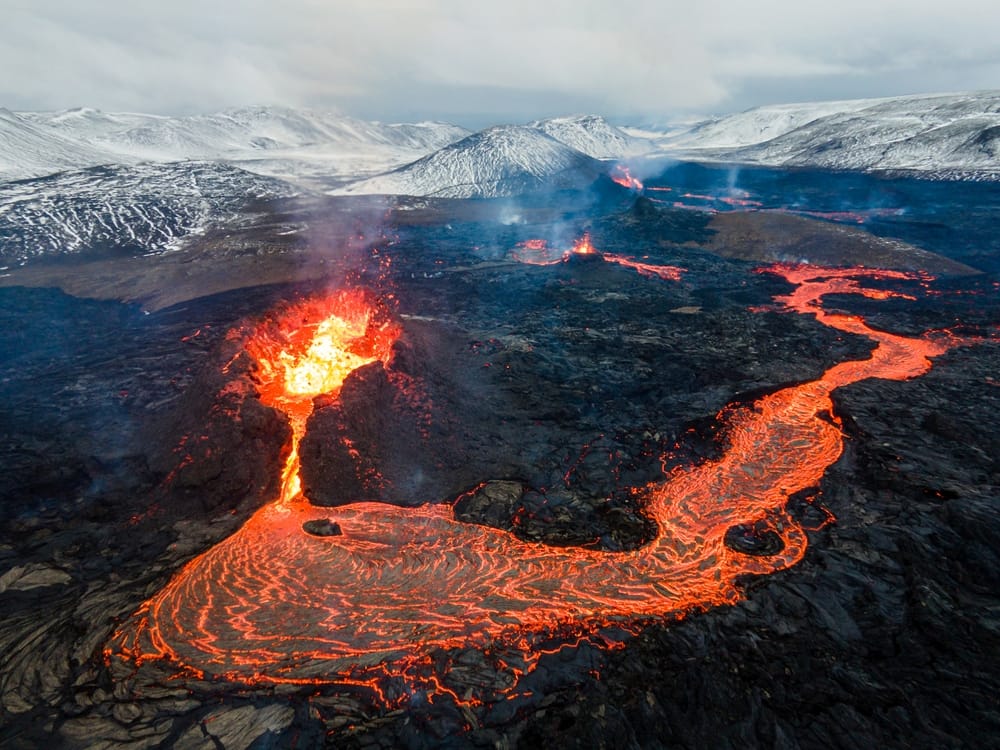
The important thing to understand is the type of eruption. These are fissure eruptions, which means lava rises through cracks in the ground and flows across the surface in slow, contained rivers. They are not the explosive, ash-producing eruptions of the 2010 Eyjafjallajökull event that disrupted European air travel. Reykjanes eruptions produce lava and limited local gas emissions, not high-altitude ash clouds.
Activity in 2026 has continued to centre on the Sundhnúkur crater row near Grindavík, with periods of eruption separated by quieter intervals. Because conditions shift, we do not state current eruption status here. For live updates, the Icelandic Met Office (Veðurstofan) tracks seismic and volcanic activity, and Almannavarnir, the Department of Civil Protection, issues official safety advisories and zone closures. If you want a broader sense of the area, our companion guide Reykjanes Peninsula Self Drive walks through the landscape in more detail.
Is It Actually Safe to Travel to Iceland Right Now?
Yes, it is safe to travel to Iceland right now. The country has remained open throughout the Reykjanes eruption cycle, KEF Airport has continued to operate on a normal schedule, and Reykjavík and the rest of Iceland are entirely unaffected by the volcanic activity. Tourism has carried on as usual, with visitor numbers in 2025 close to pre-eruption levels.
The geography matters here. The active zone is concentrated in a small area near Grindavík on the Reykjanes peninsula, and Icelandic authorities cordon off the affected area whenever there is an active or imminent eruption. Roads are closed, hiking access is restricted, and the public is kept at a safe distance. The rest of the peninsula, including KEF Airport, continues to function normally throughout.
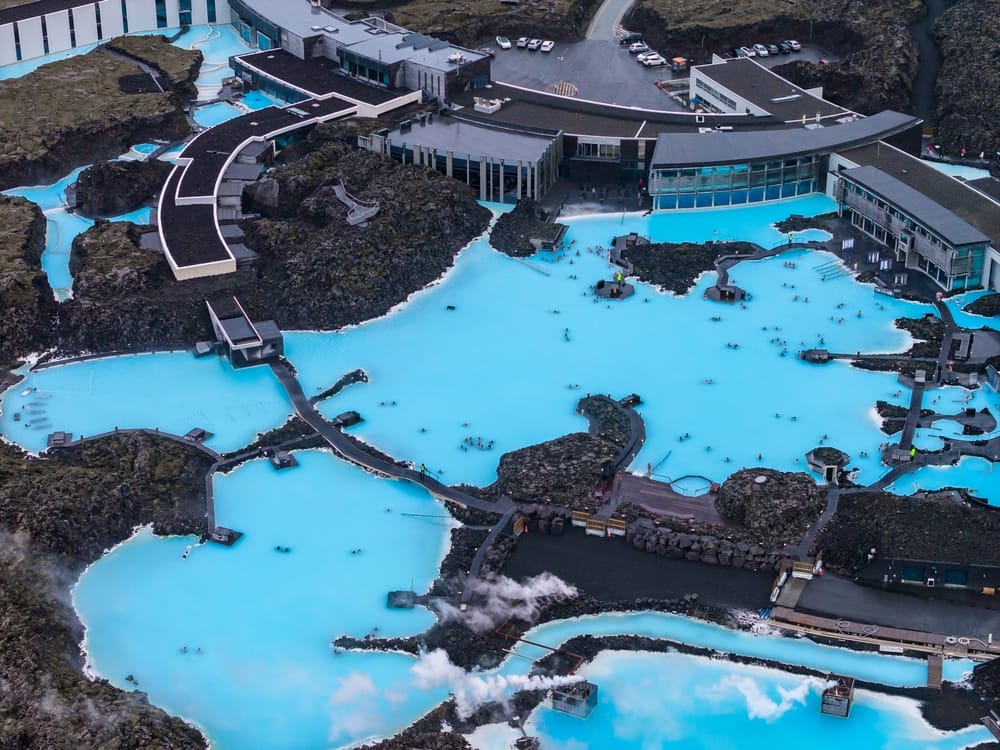
There is one honest caveat. The town of Grindavík has been significantly impacted by the eruption cycle and remains largely evacuated, and the Blue Lagoon has temporarily closed during periods of nearby activity. Access to both can change at short notice, so check Safetravel.is for current status before planning a visit. Beyond this small exception, the standard Iceland itinerary, including the Golden Circle, the South Coast, the Highlands in summer, and the north, is entirely open and operating normally.
Can You See the Volcano? Tours and Viewing Options
For travellers who do want to see volcanic activity up close, there are options, but access depends entirely on what is happening on the ground at the time. When an eruption is active and the site has been declared safe for visitors by Almannavarnir, licensed Icelandic tour operators run guided experiences. When the site is closed, no operator is permitted to take visitors in, and you should be wary of anyone offering to.
The most reliable option during active periods is a helicopter tour from Reykjavík. Helicopter operators can adjust flight paths to stay within approved airspace and give you an aerial view of the fissures, lava field, and surrounding landscape without ground access. Tours typically run from 45 minutes to two hours.
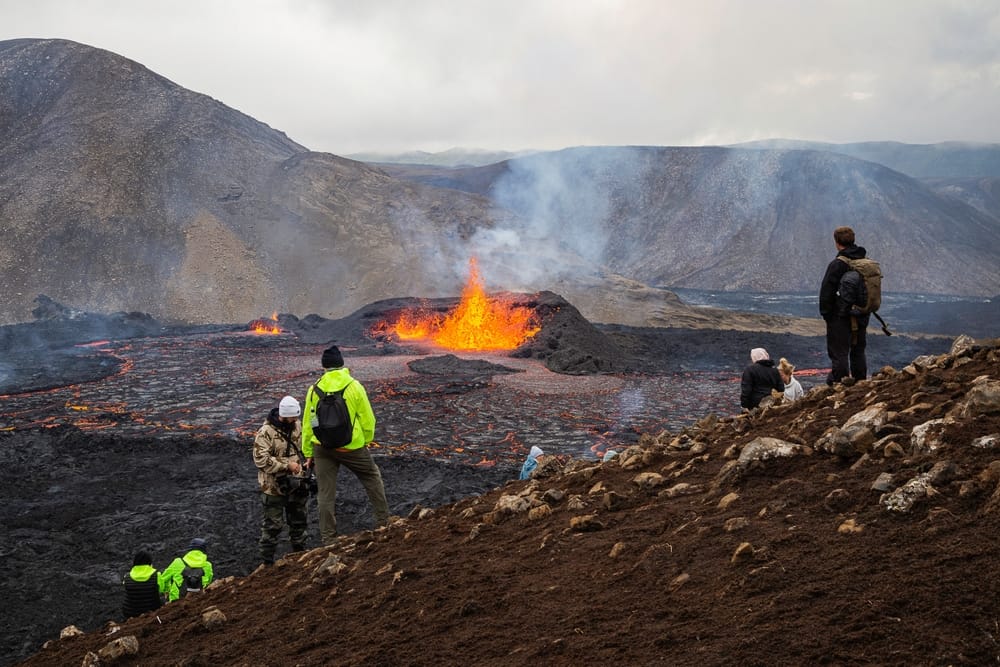
Guided hiking tours to viewing points are sometimes available when ground conditions allow. These are run by licensed operators who coordinate directly with Icelandic authorities on permitted routes, gas levels, and weather windows. They are not always available, and that is by design: access is reopened only when it is genuinely safe.
Even when the eruption site itself is closed, the wider Reykjanes peninsula remains a worthwhile visit on its own terms: lava fields from earlier eruptions, geothermal areas, dramatic coastline, and the bridge between the tectonic plates. For current tour availability, check Visit Reykjanes or Safetravel.is.
What to Know Before You Travel
A bit of preparation goes a long way, and the same advice applies whether or not there is volcanic activity during your trip.
Check official sources before you fly and during your stay. Safetravel.is is the single best resource for current conditions, road closures, and any restricted areas. The Icelandic Met Office covers seismic and volcanic monitoring, and Almannavarnir issues official advisories. Bookmark all three before you travel and check them again on arrival.
Build flexibility into your bookings. Travel insurance that covers natural events is sensible for any Iceland trip, and many travellers opt for flexible or refundable accommodation as a precaution. KEF Airport operations have not been disrupted by the Reykjanes eruptions to date, but flexible bookings give you peace of mind regardless.
Stay informed once you arrive. If you are travelling during a period of activity, sign up for SMS alerts through Safetravel.is, follow guidance from local authorities, and respect all road closures and restricted zones. Do not attempt to approach the eruption site independently, regardless of what you see on social media. The cordons exist because conditions can shift quickly, and gas levels in particular are not visible to the eye.
Trust your guides and operators. Icelandic tour operators are highly experienced with the conditions and will not run a tour if it is not safe to do so. If a tour is operating, it is operating because the authorities have cleared it.
Frequently Asked Questions
Is KEF Airport affected by the volcano?
No. KEF Airport sits roughly 20 kilometres from the active eruption zone, and the fissure eruptions on the Reykjanes peninsula do not produce the kind of high-altitude ash plume that disrupts aviation. The airport has operated on a normal schedule throughout the eruption cycle.
Has Iceland's volcanic activity affected flights?
The Reykjanes eruptions have not caused flight disruption. This is a different type of eruption from the 2010 Eyjafjallajökull event, which sent ash high into the atmosphere across European airspace. The Reykjanes fissures release lava at ground level with minimal ash, so flight operations at KEF Airport and across Europe have been unaffected.
Is the Blue Lagoon open?
It depends on current conditions. The Blue Lagoon has temporarily closed during periods of nearby volcanic activity and reopened when conditions allow. Check the Blue Lagoon website and Safetravel.is for current status before booking.
How close can you get to the eruption?
Only as close as Icelandic authorities permit, and only with a licensed operator on an approved route. When the site is open to guided access, helicopter tours and supervised hiking routes offer safe viewing. When the site is closed, it is closed for good reason, and approaching independently is both illegal and genuinely dangerous due to invisible gas hazards.
Will the eruptions stop soon?
Probably not in the short term. Icelandic geologists expect the current Reykjanes cycle to continue intermittently for years, possibly decades. This is not cause for alarm. It is a return to a long-running geological pattern that has shaped the peninsula for thousands of years, and Iceland's monitoring and response systems are built around exactly this kind of sustained, predictable activity.
The Bottom Line
Iceland is safe to visit. The Reykjanes eruptions are a contained, well-monitored event affecting a small area of the peninsula, and the rest of the country, including KEF Airport, Reykjavík, and every major tourist route, is operating exactly as it always has. The volcanic activity has become part of the landscape rather than a reason to avoid it.
Before you travel, bookmark three sources: Safetravel.is for current conditions, the Icelandic Met Office for volcanic monitoring, and Almannavarnir for official advisories. Check them before you fly and again on arrival. Build a little flexibility into your bookings, trust the guidance from local authorities, and the rest of the trip will look much like any other Iceland trip: dramatic, memorable, and entirely worth the journey.