7 Things to Do in Keflavík and Around the Reykjanes Peninsula
The Reykjanes Peninsula
The Reykjanes Peninsula, the stretch of volcanic terrain KEF sits on, is not a forecourt. It is a distinct Icelandic landscape: tectonic ridges, boiling mud fields, black basalt cliffs, and active geothermal ground, almost all of it within 45 minutes of the terminal. There are plenty of things to do in Keflavík and the wider Reykjanes Peninsula that most international visitors never see.
This guide is for travellers with a rental car and a few hours to spare, whether you have just landed and want to explore before heading east, or you have an afternoon before a late departure. Layover travellers with six or more hours will find options here too. What follows is a concrete 7-stop route, plus planning advice to make it work.
Why the Reykjanes Peninsula Deserves a Day of Its Own
Reykjanes sits directly on the Mid-Atlantic Ridge, the boundary where the North American and Eurasian tectonic plates meet and slowly pull apart. That is not a metaphor or a marketing line. At the Bridge Between Continents, you can walk across the rift in a few minutes. Beneath your feet, the ground is still moving.
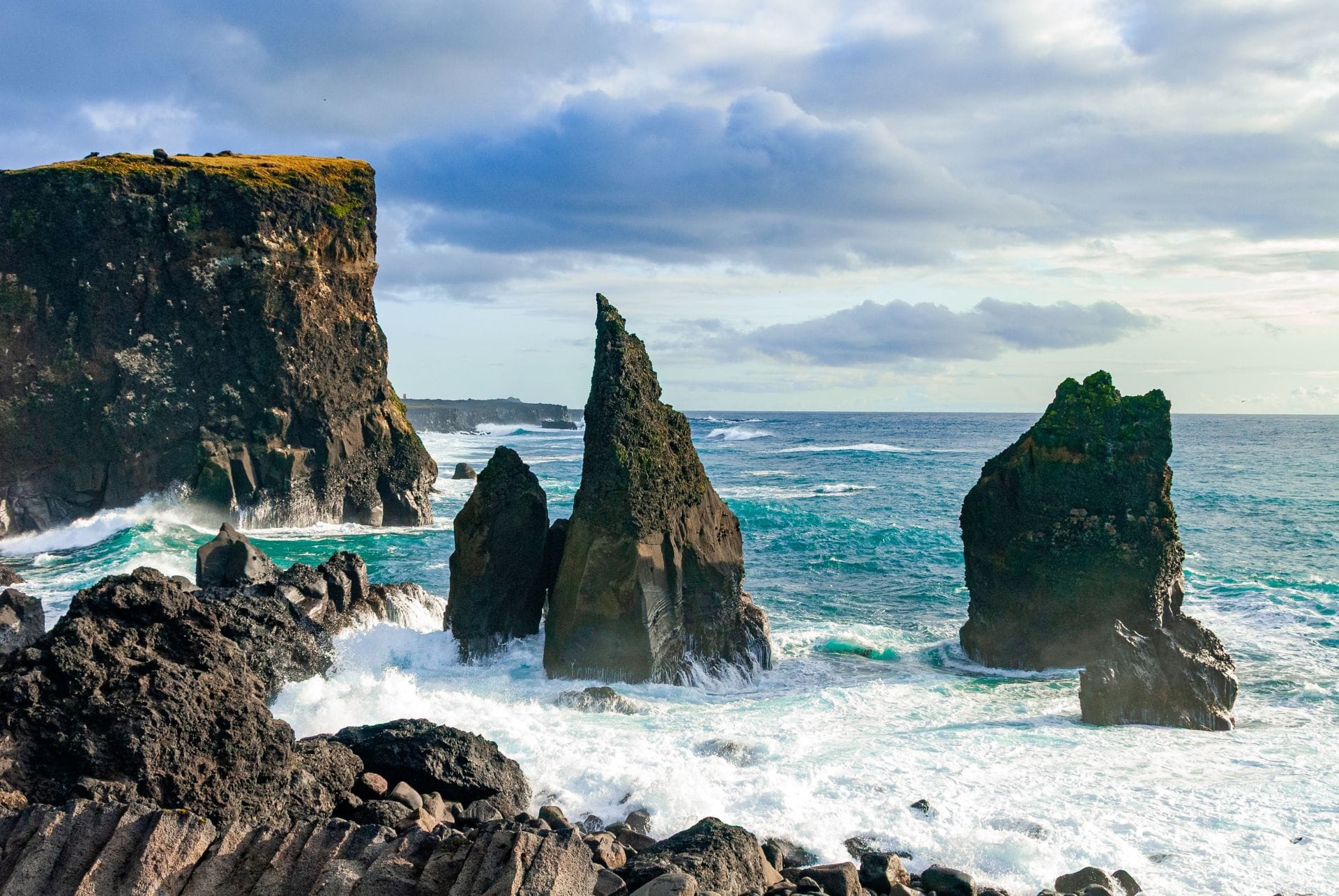
That geological drama plays out across the whole peninsula. Within a 30–45 minute drive of KEF, you will find Iceland's largest geothermal mud pools at Gunnuhver, coastal cliffs of stacked black basalt at Valahnúkamöl, the striking volcanic surroundings of Kleifarvatn, and the sulphur vents and boiling earth of the Seltún geothermal field. The entire area holds UNESCO Global Geopark status, recognition that this landscape is genuinely significant, not just photogenic.
It is also, relative to the Golden Circle, quiet. The tour buses go east. The peninsula rewards the traveller who goes south instead, and the things to do in Reykjanes are as varied as anywhere else in Iceland — just without the queue.
Before You Go - Planning Your Reykjanes Road Trip
A rental car is essential. Public transport on the Reykjanes Peninsula is minimal, and the stops on this route are spread across terrain that no bus serves reliably. If you have not already arranged one, car hire is available in the arrivals hall at KEF.
How long do you need for a Reykjanes Peninsula road trip?
You can see the highlights in as little as two hours, but a full loop takes around 7–8 hours including stops. For most travellers arriving at or departing from Keflavík Airport (KEF), a half-day of roughly four hours hits the best balance — enough time for the Bridge Between Continents, a geothermal stop, the coastal cliffs, and a finish at the Blue Lagoon.
The roads are mostly paved, with a few gravel spurs to viewpoints; a standard hire car handles them without difficulty. In winter, check road conditions before setting out. Pack layers, a waterproof jacket, and sturdy shoes — lava fields and coastal paths are uneven. Fill the tank before leaving the Reykjanes area, as fuel stations are sparse away from Route 41.
7 Things to Do in Keflavík and Around the Reykjanes Peninsula
The route below runs roughly clockwise from the airport, starting at the peninsula's western tip and looping back via the south coast. Each stop includes an approximate drive time from the previous one.
1. Bridge Between Continents
Drive from KEF: ~15 minutes
At the Bridge Between Continents, a short pedestrian walkway spans the rift between the North American and Eurasian tectonic plates. It is a modest structure over a dramatic geological reality — you are standing on the boundary where two continents pull apart at roughly 2.5 centimetres per year. Allow around 20 minutes; it is a photo stop rather than a long excursion, but the context makes it one of the more genuinely distinctive things to do in Keflavík.
2. Gunnuhver Geothermal Area
Drive from stop 1: ~10 minutes
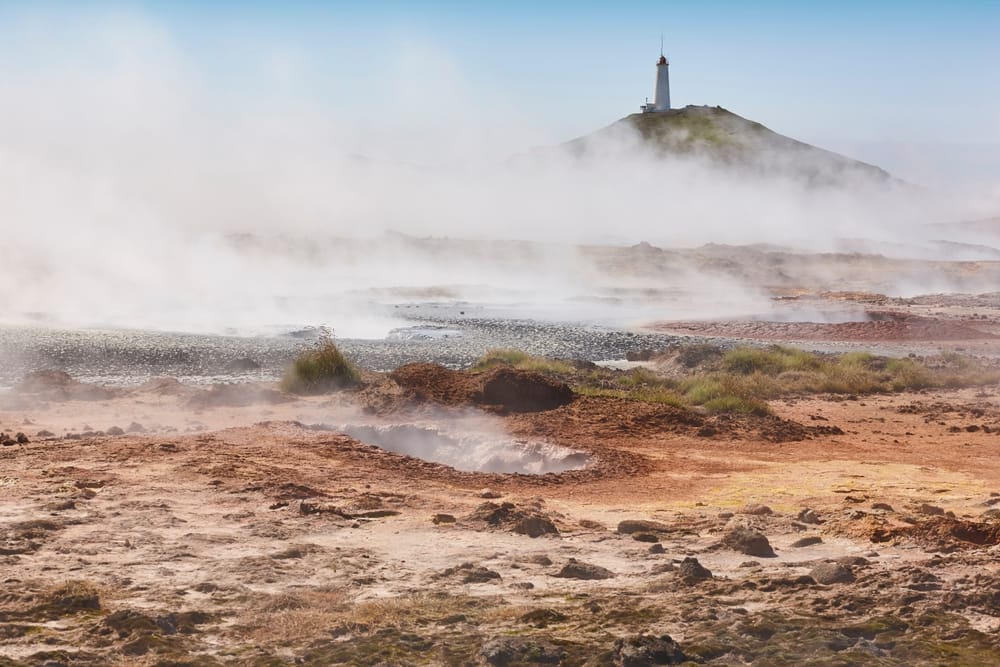
Gunnuhver is Iceland's largest geothermal mud pool, and it earns the description. Steam billows from vents across a wide area of ochre and grey earth, and the boardwalk takes you close enough to feel the heat. Allow 30 minutes. The smell of sulphur is strong, that is normal, and it fades quickly once you move on.
3. Reykjanesviti Lighthouse and Valahnúkamöl Cliffs
Drive from stop 2: ~5 minutes
Iceland's oldest lighthouse stands on a headland above Valahnúkamöl, a stretch of stacked black basalt columns where the Atlantic breaks hard against the coast. The cliffs are striking at any time of year; in summer, seabirds nest in the rock faces. Allow 40 minutes to walk the coastal path properly.
4. Brimketill Lava Rock Pool
Drive from stop 3: ~10 minutes
Brimketill is a natural seawater pool carved into the lava by centuries of wave action. A short boardwalk leads to a viewpoint above it. The pool itself is not for swimming — the swell makes it dangerous — but it is one of the more photogenic spots on the peninsula. Allow 20 minutes.
5. Krýsuvík / Seltún Geothermal Field
Drive from stop 4: ~25 minutes
Seltún is the geothermal field most visitors remember. Boardwalks wind through an area of boiling mud pots, sulphur vents, and vivid mineral-stained earth in shades of red, yellow, and green. It is more colourful and more varied than Gunnuhver, with the added drama of Kleifarvatn visible nearby. Allow 45 minutes.
6. Kleifarvatn Lake
Drive from stop 5: ~5 minutes
Kleifarvatn sits in a volcanic depression ringed by dark hills, its black-sand shore stretching in both directions with almost no development in sight. It is a quieter stop, more about the atmosphere than a specific feature. Allow 30 minutes to walk a section of the shore.
7. Blue Lagoon
Drive from stop 6: ~30 minutes
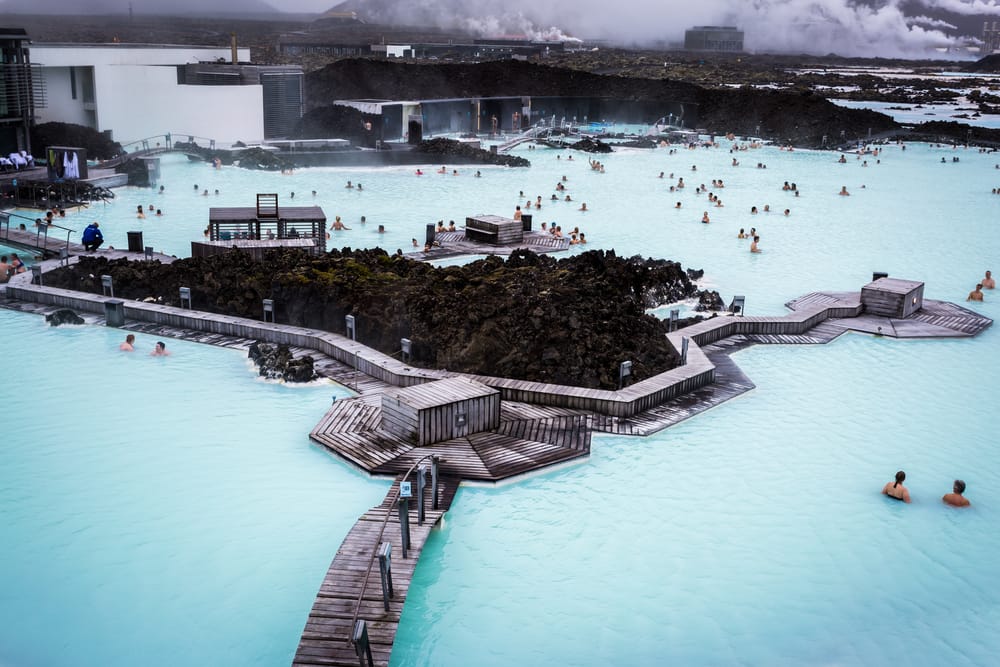
The Blue Lagoon is the natural closer for this route, and it needs no introduction. Book your slot well in advance, same-day entry is rarely available. For a full guide to fitting the Blue Lagoon around your flight, see our Blue Lagoon stopover guide. If you are continuing to Reykjavík afterwards, the drive takes around 50 minutes from the lagoon.
If access is restored: Grindavík The fishing town of Grindavík lies close to several stops on this route. The area has been affected by volcanic activity and associated disruptions since 2023, and access has varied considerably. Before planning a visit, check current conditions via Safetravel.is and local news sources. The information in this guide is written to remain relevant regardless of current status, always verify before you go.
Suggested Routes by Time Available
Not everyone has a full day. The three options below let you match the route to your actual window.
2 hours (layover or tight connection)
Head straight for the western tip of the peninsula: Bridge Between Continents, Gunnuhver, and Reykjanesviti. All three are within 15 minutes of each other and around 30 minutes from KEF. This is the most concentrated stretch of the route, and it stands well on its own.
Half-day (~4 hours)
Do the two-hour circuit, then continue east along the coast to Brimketill and finish at the Blue Lagoon. You will cover the best of the peninsula's western and southern edges without overextending.
Full day (~7–8 hours)
The complete seven-stop loop, running clockwise from KEF and finishing at the Blue Lagoon before continuing to Reykjavík or returning to the airport. This is the version that includes Seltún and Kleifarvatn, and it is worth the time if you have it.
Departing travellers: work the route in reverse and build in a minimum 2.5-hour buffer before your flight. Check live departures before leaving your final stop.
Conclusion
The Reykjanes Peninsula asks very little of you. A rental car, a few hours, and the willingness to stop before you reach Reykjavík. What it offers back — tectonic rifts, geothermal steam, basalt cliffs, volcanic lakes — is a version of Iceland that most visitors never slow down enough to see.
For a deeper look at the peninsula's stand-out attractions, the Blue Lagoon stopover guide and Reykjanes volcano guide cover both in full. When you're ready to sort the logistics — parking at KEF, car hire, and terminal information — it's all in one place.
The things to do in Keflavík and across the Reykjanes Peninsula are right outside the terminal. You just have to choose not to skip them.