The Blue Lagoon from Keflavík Airport: how close is it, and is it worth the stop?
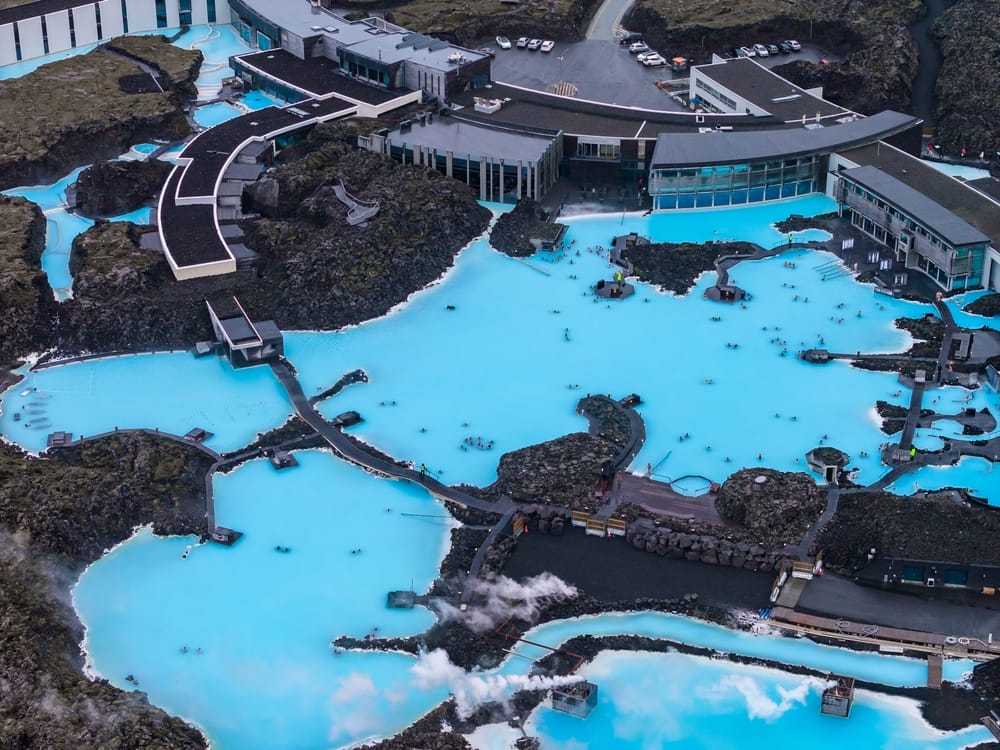
The Blue Lagoon and KEF
Keflavík Airport (KEF) sits on the Reykjanes Peninsula, roughly 50 km south-west of Reykjavík. The Blue Lagoon sits on the same peninsula, about halfway between the airport and the capital. That geography is important. It means the Blue Lagoon is not a detour from KEF, it is practically on the route. For the right traveller, on the right timing, fitting it around a flight is genuinely straightforward. For the wrong combination of timing and logistics, it adds unnecessary stress to an already long journey.
This guide focuses on the operational side of the decision: distances, transfer options, luggage, timing buffers, and what to do if plans change. For the spa experience itself — the silica mud, the bathing pools, the packages — bluelagoon.com is the right source. KEF's authority here is the airport and everything around it.
Whether you are landing at KEF and heading straight to the lagoon before your hotel checks in, or squeezing in a final soak before your evening flight home, the logistics are different. Both scenarios are covered here in full. If this is your first time at the airport and you want a broader picture of what to expect on arrival, landing at KEF for the first time covers the full arrivals sequence.
How far is the Blue Lagoon from Keflavík Airport?
Quick answer
The Blue Lagoon is approximately 23 km (14 miles) from Keflavík Airport (KEF), about a 20-minute drive. Direct shuttle services take around 30 minutes. Blue Lagoon transfer packages (offered by operators such as Reykjavík Excursions / Flybus) may include this leg as part of a combined route. For comparison, the Blue Lagoon is roughly 50 km from Reykjavík, meaning it is closer to the airport than to the capital, which is exactly why fitting a visit around your flight makes practical sense.
The Blue Lagoon and KEF share the same stretch of lava field. You are not doubling back or making a significant detour, the two are connected by a short drive along Route 41 and then Route 43, with the lagoon sitting just off the main road.
By car or taxi, the journey takes around 20 minutes in normal conditions. By shuttle, allow closer to 30 minutes: operators including Reykjavík Excursions (Flybus) offer Blue Lagoon transfer packages that include this route as part of combined services between KEF, the lagoon and Reykjavík, but the routing includes a brief departure sequence from the terminal that adds a few minutes to the pure drive time.
The Reykjavík comparison is worth holding onto. Many first-time visitors assume the Blue Lagoon is a Reykjavík attraction, it is not. It is a Reykjanes attraction, and Reykjanes is where KEF is. The drive from Reykjavík to the Blue Lagoon takes around 50 minutes, more than double the airport journey. If you are planning to visit during your trip, doing it on the way through KEF is almost always more efficient than making a separate day trip from the city.
One practical note on timing: the distances above are straightforward, but the clock starts from when you are ready to travel, not from when you land or when your hotel checkout happens. Factor in immigration and baggage reclaim on arrival, or hotel checkout logistics on departure, before you calculate your transfer window. Both scenarios are unpacked in the sections below.
Which scenario are you? Arrival-day vs departure-day
There are two distinct ways to fit the Blue Lagoon around a KEF flight, and they have genuinely different logistics. Before getting into the detail, it is worth identifying which applies to you.
Arrival-day: You have just landed at KEF, typically on an overnight transatlantic flight, and your hotel in Reykjavík does not check in until the afternoon. You have several hours to fill, your bags need somewhere to go, and you have not slept particularly well. The Blue Lagoon's early-morning slots turn that gap into something useful rather than something to endure. The key logistical question is luggage: you cannot check into your hotel yet, so your bags need a plan.
Departure-day: You are leaving Iceland on a late-afternoon or evening flight. Your hotel checkout was this morning, and you have a window of several hours before you need to be at the airport. The Blue Lagoon sits geographically between Reykjavík and KEF, so visiting on the way out is a natural fit. The key logistical question here is timing: you need to be back at KEF with enough buffer before your flight, and that calculation requires some care.
The next two sections work through each scenario in full. If you are in neither camp, perhaps you are on a long layover or making a spontaneous call mid-trip, both sections will still give you what you need. The logistics are the same; only the direction changes.
The arrival-day stopover - landing at KEF Airport and going straight to the lagoon
Why arrival-day works
Most transatlantic flights from North America land at KEF somewhere between 05:00 and 07:00. Your hotel in Reykjavík almost certainly does not check in until 14:00 or 15:00. That is a gap of eight hours or more, arriving in a new country, likely short on sleep, with nowhere to put your bags and nothing useful to do.
The Blue Lagoon opens its earliest slots at around 07:00 or 08:00. That timing is not a coincidence, it is precisely calibrated for this kind of traveller. Rather than spending that gap sitting in a coffee shop in Reykjavík with your luggage stacked around you, you can be in a geothermal pool by 08:30, decompress for two or three hours, and arrive at your hotel in the afternoon feeling like a functioning human being.
The case for doing it on arrival rather than later in the trip is also practical. Slots fill up, particularly in peak season. If you book in advance (via bluelagoon.com — KEF does not handle lagoon bookings), the arrival-day visit is guaranteed. If you leave it as a "maybe later in the trip," it often does not happen.
One honest caveat: this scenario works best when you have slept at least a little on the flight and are not in the kind of exhaustion that makes a warm pool feel like a drowning risk. If you are travelling with young children on disrupted sleep, factor that in before committing.
Collecting your bags and dealing with luggage
The practical question most travellers don't think through in advance: you have just landed, you cannot check into your hotel yet, and you have a full set of bags with you. There are two sensible options, and both work well.
Option 1: Store at KEF before you transfer. KEF's luggage lockers are located just outside the arrivals hall, so you clear baggage reclaim, collect your bags, and deposit them before you leave the building. Short-term and long-term storage is available from around ISK 2.000–3.000 per 24 hours depending on locker size. If you go this route, you will need to return to KEF to collect your bags before heading to Reykjavík, so build that leg into your onward journey. The natural sequence is: land, lockers, Blue Lagoon, back to KEF, Reykjavík.
Option 2: Take your bags to the lagoon. The Blue Lagoon has a secure, heated luggage storage facility in the car park for larger bags (typically around ISK 1.000–2.000 per bag), and changing room lockers for smaller items such as backpacks. If you are travelling light or prefer to keep everything with you, this is a straightforward option that lets you head straight from the lagoon to your hotel without doubling back.
The right choice depends on your luggage volume and your onward routing. Travelling with one manageable bag and heading straight to Reykjavík after? Take it with you. Travelling with multiple large cases? The KEF lockers keep things simpler.
Transfer from KEF to the Blue Lagoon
Once your luggage is sorted, the transfer is straightforward. You have three realistic options.
Destination Blue Lagoon coach. The Blue Lagoon's own transport partner runs direct coach services from KEF to the lagoon. Booking through them when you purchase your entry is the most integrated option: your transfer and your slot are coordinated from the outset, and the coaches are dedicated to lagoon visitors. Luggage is accommodated. This is the natural starting point for most travellers.
Shuttle (Flybus and others). Shuttle / coach. The most straightforward bus option is Destination Blue Lagoon, the Blue Lagoon’s official transport partner, which connects the spa with both Keflavík Airport (KEF) and Reykjavík. Flybus, operated by Reykjavík Excursions, is the official airport transfer service between KEF and Reykjavík. Reykjavík Excursions also offers Blue Lagoon transfer and admission products, including options that start from Keflavík Airport, so it can be worth checking their current products if Destination Blue Lagoon’s schedule does not suit your timing. Because transfer formats and timetables vary, it is best not to describe Flybus as a standard direct KEF–Blue Lagoon shuttle in the same way as Destination Blue Lagoon.
Taxi. A taxi from KEF takes around 20 minutes and makes sense if you are travelling as a group splitting the fare, or arriving on an early flight outside scheduled coach hours. Taxis from KEF are available at the terminal.
Rental car. If you have already planned to hire a car, collecting it at KEF and driving directly to the lagoon is a natural fit. Car rental at KEF is available from the terminal.
Realistic timing from landing to lagoon entry: Allow at least 60–90 minutes between your scheduled arrival time and your lagoon slot. That window covers immigration, baggage reclaim, luggage handling, and the transfer itself. Book your slot accordingly — do not assume you can go from touchdown to pool in 45 minutes.
Onward travel to Reykjavík
After your lagoon visit, you need to get yourself (and your bags, if you stored them at KEF) to Reykjavík or wherever you are staying.
If you stored your bags at KEF, the most practical route is to take the shuttle back to the airport first, collect them, then continue to the city. Destination Blue Lagoon connects the spa with both Keflavík Airport (KEF) and Reykjavík, while Flybus, operated by Reykjavík Excursions, is the official airport transfer service between KEF and Reykjavík. Reykjavík Excursions also offers Blue Lagoon transfer products, but these should not be described in the same way as the regular Flybus airport shuttle. Check the operator’s schedule when you book so your return routing is already planned.
If you took your bags to the lagoon, your onward journey is simpler: shuttle or taxi directly from the Blue Lagoon to Reykjavík, no detour required. The Blue Lagoon to Reykjavík by shuttle takes around 45–50 minutes.
A note on timing: by the time you have finished at the lagoon, most Reykjavík hotels will be approaching or past their standard check-in window. If your hotel has a left-luggage facility, you can drop bags and head out even if your room is not yet ready. It is worth contacting your hotel in advance to confirm their policy, particularly if you are arriving on a busy day in peak season.
One thing to avoid: booking a lagoon slot so late in the morning that you end up rushing through your visit in order to make hotel check-in. The arrival-day scenario works best when you give yourself enough time to actually relax.
The departure-day stopover - before your flight out of KEF Airport
Why departure-day works
Most Reykjavík hotels require checkout by 11:00 or 12:00. If your flight departs in the late afternoon or evening, which describes a large proportion of KEF's international departures, you are left with a gap of four to eight hours between checkout and when you need to be at the airport. That time has to go somewhere.
The Blue Lagoon sits geographically between Reykjavík and KEF. Visiting on the way to the airport is not a detour. It is, in most cases, literally on your route. Rather than filling that gap with an extra museum visit you are too tired to enjoy, or sitting in a Reykjavík café watching the clock, you can spend it in the water and arrive at KEF relaxed and ready to board.
There is also a psychological argument for doing it on departure rather than arrival. By the end of a trip, you know Iceland better. You are less likely to feel rushed by novelty, more likely to settle in and use the time well. First-time visitors sometimes find the arrival-day visit slightly frantic, fresh off a long flight, disoriented, trying to process a new country from inside a geothermal pool. On departure, you already know the rhythm of the place.
The departure-day scenario does require more careful timing than arrival-day. The lagoon is a fixed point between you and your flight, and the margin for error is real. That calculation is covered in the next section.
Timing your return to KEF — the critical bit
This is where departure-day planning either works or unravels. The transfer back to KEF from the Blue Lagoon takes around 30–45 minutes by shuttle, depending on routing. International flights at KEF generally require you to be at the airport at least 2.5 hours before departure, sometimes 3 hours for US-bound flights to allow extra time for check-in, security and passport control. Work backwards from there, not forwards from checkout.
Here is a concrete example. Flight departing at 17:00:
- Arrive at KEF by 14:30 (2.5 hours before, international standard)
- Leave the Blue Lagoon by 13:30 (allow 60 minutes for shuttle plus check-in buffer)
- Arrive at the lagoon by 10:00 to get a worthwhile three-hour visit
- Leave your hotel by 09:00 (allow at least 60 minutes for the journey from central Reykjavík to the lagoon, depending on your transfer option)
That works. Comfortably, in fact. But notice how quickly the margin tightens if you add 30 minutes of faff at checkout, or if the shuttle runs late.
The rule of thumb: build in at least 30 minutes more buffer than you think you need on the return leg. The lagoon is not worth missing a flight over, and KEF's check-in desks do not make exceptions for travellers who misjudged the timing.
Before leaving the lagoon, check your flight status on live departures at KEF. Gates and timings can shift, and it is better to know before you are on the shuttle than after.
What to do with your luggage
On departure day, luggage is simpler than on arrival. Check out of your hotel, load your bags onto the shuttle, and head directly to the Blue Lagoon. Destination Blue Lagoon coaches and other shuttle operators such as Flybus and Reykjavík Excursions accommodate luggage on the KEF route, so there is no need for a separate detour.
At the lagoon, larger bags go into the secure, heated storage facility in the car park (typically around ISK 1,000–2,000 per bag). Smaller items such as backpacks fit in the changing room lockers. When you are done, your bags come with you on the return shuttle to KEF.
If you happen to be staying at a hotel near the airport, you can of course drop your luggage in KEF's luggage lockers before heading to the lagoon, but for most travellers based in Reykjavík, going directly to the lagoon with your bags is the straightforward choice.
Contingency — what if your transfer is delayed
The return transfer from the Blue Lagoon to KEF is reliable under normal conditions, but normal conditions are not guaranteed. Traffic, weather, and occasional operational issues can add time to the journey. The consequences of a delayed return are asymmetric: arriving at the lagoon late costs you time in the water; arriving at KEF late costs you your flight.
A few practical steps that reduce the risk:
- Build a genuine buffer. The timing example in the previous section assumed 60 minutes for the return transfer. That is a reasonable working figure, but not a minimum. If your flight is in the evening and you have flexibility, leave the lagoon earlier than you think you need to.
- Check your flight before you leave. Pull up live departures at KEF before you board the return shuttle. If your flight has moved or your gate closes earlier than expected, you want to know while you still have options.
- Know the taxi option. If a Destination Blue Lagoon coach or other shuttle is delayed or you have missed a departure, a taxi from the Blue Lagoon to KEF takes around 20 minutes and is available on short notice. It costs more than the shuttle, but significantly less than a rebooking fee. Keep the taxi from KEF page to hand as a backup.
The departure-day stopover is low-risk when planned properly. The travellers who run into trouble are almost always the ones who built no margin into their timing.
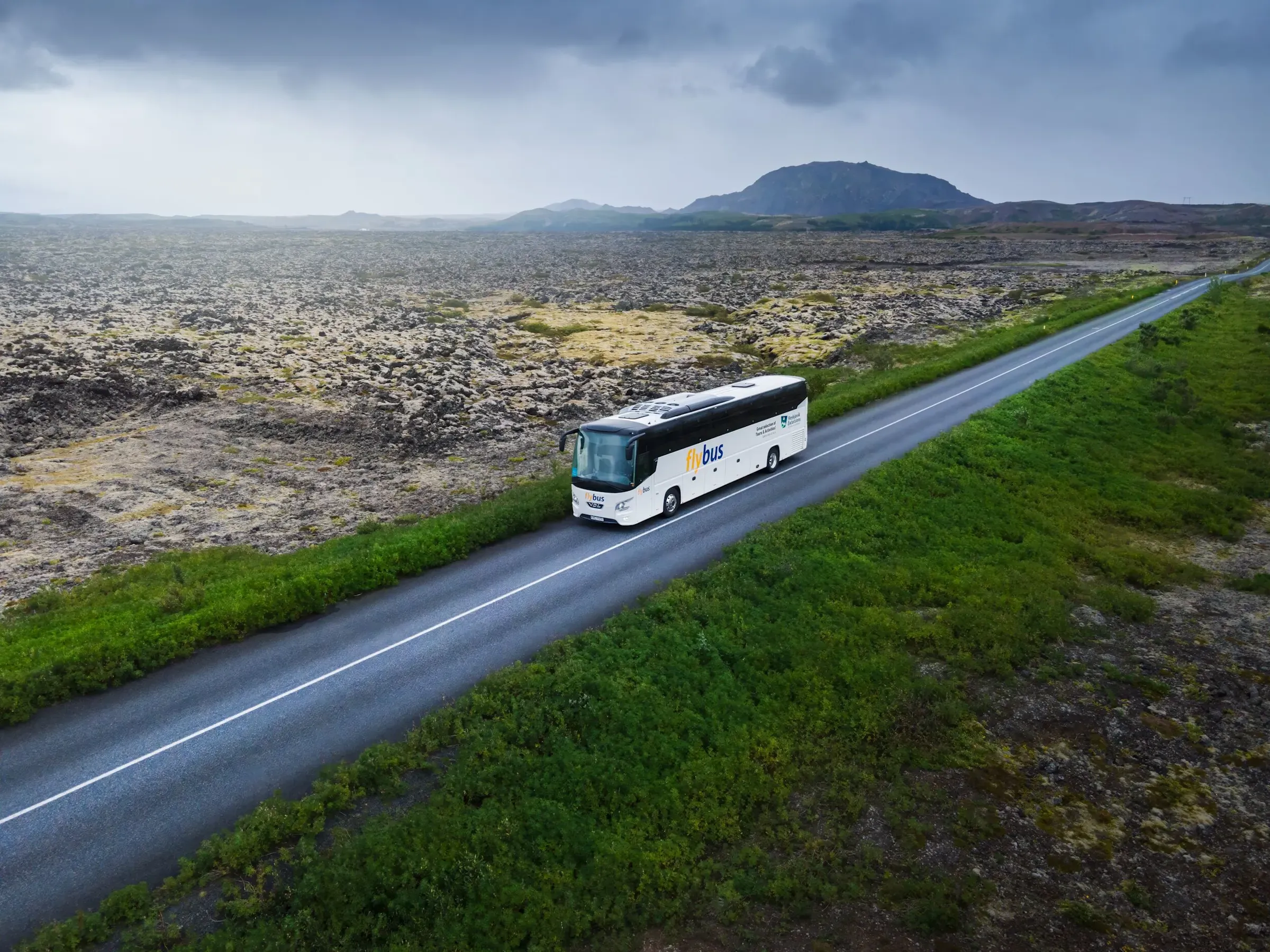
Getting there: transfer options compared
For a full overview of transport to and from KEF, the getting to and from KEF Airport page covers all options. What follows is specific to the Blue Lagoon route.
Shuttle / coach
The shuttle is the default choice for most travellers. The Blue Lagoon's own transport partner, Destination Blue Lagoon, operates direct coach services from Keflavík Airport and from Reykjavík hotels and guest houses. Booking through them when you purchase your lagoon entry is the most seamless option: your transport and your slot are coordinated from the outset, the coaches are dedicated to lagoon visitors, and the service runs on a schedule built around the lagoon's opening hours rather than general tourism routes. If you are flying in or out of KEF and want the simplest possible transfer, this is the natural starting point.
Reykjavík Excursions (Flybus) offers Blue Lagoon transfer packages that include this corridor, typically as part of combined services between KEF, the lagoon, and Reykjavík, as do Gray Line. These are worth considering if Destination Blue Lagoon's schedule does not align with your timing, or if you prefer to keep transport and lagoon booking separate. All accept luggage and run services timed broadly around flight schedules.
The trade-off with any scheduled shuttle is flexibility: you are working around departure times rather than your own. For most travellers this is a non-issue, but it is worth factoring in if your lagoon visit is likely to run long.
Taxi
A taxi from KEF to the Blue Lagoon takes around 20 minutes and from Reykjavík around 50 minutes. It is the right choice in a handful of specific situations: you are travelling as a group of three or four and can split the fare, your flight arrives at an hour when shuttle services are not yet running, or you need to leave the lagoon at a time that does not align with scheduled departures.
Taxis from KEF are available at the terminal. For the return journey, taxis can be arranged on site or booked in advance.
Self-drive (rental car)
Driving yourself makes the most sense if you have already planned to hire a car during your trip. Picking up your rental at KEF on arrival and driving directly to the Blue Lagoon adds no meaningful detour — the lagoon is on the route, parking is straightforward, and you continue to Reykjavík or wherever you are headed without waiting for a shuttle.
The drive from KEF follows Route 41 and then Route 43, takes around 20 minutes, and is uncomplicated in good conditions. Iceland's weather can change quickly, and the Reykjanes Peninsula is particularly exposed to wind. If you are arriving in winter or shoulder season, check road conditions before you set off. The Icelandic Road and Coastal Administration's website (road.is) is the standard reference for live conditions.
Car rental at KEF is available directly from the terminal. If you are also planning to explore the wider peninsula after your lagoon visit, self-drive opens up a one-day Reykjanes road trip as a natural extension of the day.
Self-drive is less suited to departure-day travellers on tight timing. With a shuttle, someone else is watching the clock. Behind the wheel, that responsibility is yours, and the margin for a wrong turn or a parking delay is smaller than it feels.
Public bus (Strætó)
Iceland's public bus network, Strætó, does not serve the Blue Lagoon directly. A combined journey is technically possible but involves multiple changes and adds significant time to what is otherwise a 20–30 minute transfer. For a trip where timing matters, and on both scenarios it does, the public bus is not a practical option. The most budget-friendly direct alternative is a shuttle seat booked in advance.
What to do with your luggage
Luggage handling is covered in the scenario sections above, but here is the short version for readers who have skipped straight to this question.
At KEF Airport. Luggage lockers at KEF are located just outside the arrivals hall, accessible immediately after baggage reclaim. Storage is available from around ISK 2,000–3,000 per 24 hours depending on locker size. Best for arrival-day travellers who want to travel light and are happy to return to KEF before heading to Reykjavík.
At the Blue Lagoon. Secure, heated car park storage for larger bags (approximately ISK 1,000–1,500 per bag), with changing room lockers for smaller items. The natural solution for departure-day travellers heading straight from checkout to the lagoon, and for arrival-day travellers who prefer to keep their bags with them.
On the shuttle. Destination Blue Lagoon coaches, Flybus, and similar operators all accommodate luggage. No separate stop required.
In brief: arrival-day with multiple large cases — use the KEF lockers. Arrival-day travelling light, or departure-day — take bags to the lagoon and store on site.
What if the Blue Lagoon is closed? Volcanic activity and contingencies
The Reykjanes Peninsula has been volcanically active since 2021. The Blue Lagoon has been evacuated and temporarily closed multiple times as a result, sometimes with very little notice. This is not a reason to avoid planning a visit, but it is a reason to have a contingency plan, and to check the status before you travel.
How to check. The Blue Lagoon's own website and official channels are the authoritative source for closure announcements. Check bluelagoon.com in the days before your visit and again on the morning of your planned stopover. If there is an eruption or precautionary closure, they will say so clearly. For any flight-side impact from volcanic activity on the peninsula, KEF's own operations pages and live departures are the right reference. The two are separate questions: the lagoon can be closed while flights operate normally, and vice versa. For the broader picture on how volcanic activity affects travel on the peninsula, volcanic activity on Reykjanes covers that in full.
If it is closed on your day. Refunds and rebooking are handled entirely through bluelagoon.com. On the contingency itself: if the lagoon is closed and you have time to fill, the Reykjanes Peninsula has significant volcanic landscapes worth exploring by car, and the drive itself is part of the experience. The Sky Lagoon, only ~15 minutes drive from Reykjavík city center, is a practical alternative if you want a geothermal bathing experience on the same day. It’s worth knowing about, though the two are distinct experiences.
The practical takeaway. Book refundable or flexible entry where possible. Know bluelagoon.com's cancellation policy before you commit. And treat the contingency plan as a five-minute task you do before you leave home, not something you improvise at the airport.
So, is the Blue Lagoon worth the stop?
The short answer: yes, for most travellers who plan it properly. But "most" is doing some work in that sentence, so here is the longer version.
Worth it if:
- You have at least four hours of gap time between landing or checkout and your next fixed commitment. Less than that and the logistics start eating into the experience.
- You are happy to book in advance. Walk-up availability exists, but slot capacity is managed. Turning up without a booking in peak season is a serious gamble.
- It is your first time in Iceland. The Blue Lagoon is genuinely unlike anything most visitors have experienced before. The novelty is real, and the arrival-day version of it, emerging from a long-haul flight into a geothermal pool at sunrise, is one of those travel memories that holds up.
- You are travelling as a couple or a small group. The logistics are uncomplicated, and the cost is easier to absorb when you are not doing it solo on a tight budget.
Probably not worth it if:
- Your connection or transfer window is under four hours. The timing math simply does not work without either rushing the visit or cutting your airport buffer to an uncomfortable margin.
- You have done it before. The Blue Lagoon is spectacular the first time; return visitors often find it does not improve on the memory, and there is a lot of Reykjanes Peninsula that most repeat visitors have not yet seen.
- You are travelling with young children on limited sleep, particularly on the arrival-day scenario. A warm pool after a transatlantic overnight flight can work beautifully or go badly, know your group before committing.
- Cost is a serious constraint. Entry is not cheap, and when you add transfer and storage costs, a solo stopover adds up quickly.
It depends:
- Families with older children or teenagers generally find it works well. Families with toddlers should read the Blue Lagoon's own age and entry policies carefully before booking.
- Travellers with mobility considerations should check the Blue Lagoon's accessibility provision directly via bluelagoon.com. The facility is generally well-equipped, but confirming in advance avoids surprises.
On the Sky Lagoon alternative: If the Blue Lagoon does not fit your timing or budget, the Sky Lagoon, located closer to Reykjavík, is a legitimate alternative for geothermal bathing. The two are different experiences: Sky Lagoon is smaller, more intimate, and set on the coast rather than a lava field. Neither is a substitute for the other, but if your answer to the Blue Lagoon is "not this trip," the Sky Lagoon is worth knowing about.
The honest verdict, in one line: if you can make the logistics work, do it. If you cannot, do not force it, Iceland has plenty of other ways to spend the time.
Quick reference — planning your Blue Lagoon stopover
If you have read this far and your answer is yes, here is everything you need to action before you go.
Your Blue Lagoon stopover checklist
- Book your lagoon slot in advance at bluelagoon.com. Do not leave this until you arrive — peak-season slots fill weeks ahead, and walk-up availability is not guaranteed.
- Book your transfer. Destination Blue Lagoon coaches (via bluelagoon.com) are the most integrated option. Alternatively, book a Flybus / Reykjavík Excursions seat on the KEF route in advance.
- Plan your luggage. Arrival-day travellers: use KEF's luggage lockers just outside baggage reclaim, or take bags directly to the lagoon's on-site storage. Departure-day travellers: take bags with you on the shuttle and store them at the lagoon.
- Check your flight before you leave the lagoon. Pull up live arrivals at KEF or live departures at KEF before boarding your return transfer.
- Arrival-day timing: Allow at least 75–90 minutes, and up to 2 hours in peak travel periods, between your scheduled landing time and your lagoon slot.. That window covers immigration, baggage reclaim, luggage handling, and the transfer.
- Departure-day timing: Leave the lagoon with at least a 2.5-hour buffer before international check-in closes. Work backwards from your flight time, not forwards from checkout.
- Have a plan B. Check bluelagoon.com for closure announcements in the days before your visit. Know their cancellation policy before you book.
Summary
The Reykjanes Peninsula is the first and last piece of Iceland most international visitors touch. The Blue Lagoon sits at the centre of it, twenty minutes from the runway, and the logistics of fitting it around a KEF flight are more straightforward than most travellers assume, provided you plan them in advance rather than on the day.
Whether you are arriving or departing, the operational picture is the same: book early, sort your luggage before you go, build a genuine buffer, and check your flight status before you leave the water. Do those four things and the stopover works. Skip any of them and it becomes a source of stress rather than a highlight.
For the wider picture on getting around the peninsula, a one-day Reykjanes road trip covers the full driving route from KEF. If volcanic activity on Reykjanes is on your mind, volcanic activity on Reykjanes addresses the safety and access questions directly. And for everything you need to know about the airport itself before you land, the KEF Airport transport and services pages are the practical starting point.
The things to do in Keflavík and on the peninsula beyond the lagoon are worth your time too. But if you only have one stop on this end of Iceland, the Blue Lagoon earns it — as long as you give it the planning it deserves.